
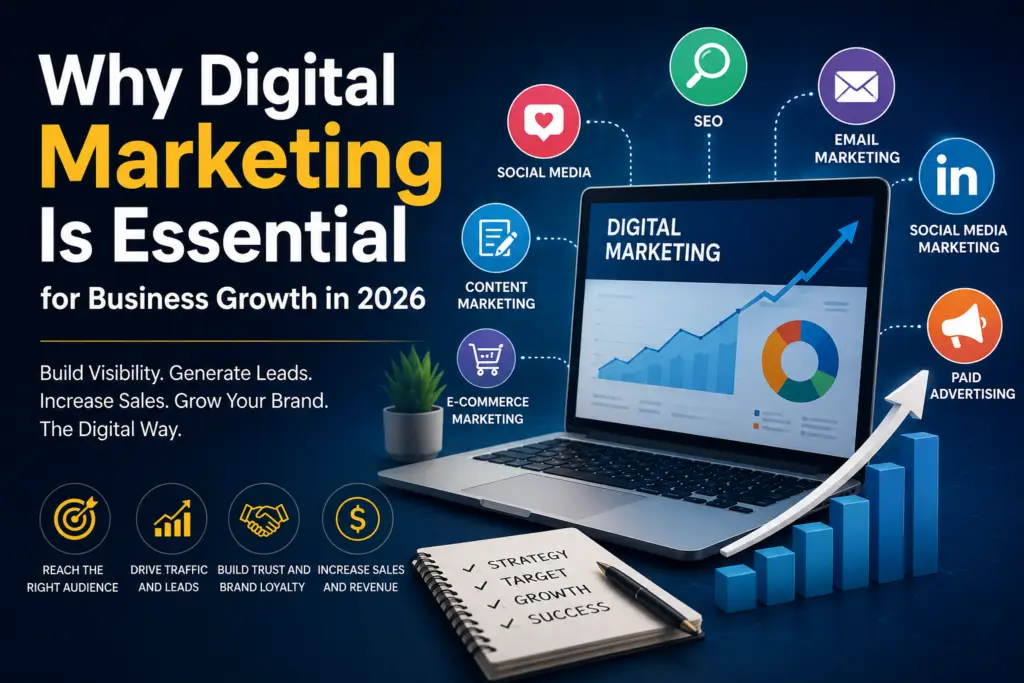
The Digital Shift Driving Modern Business Growth
In 2026, the business world is more digital than ever before. Customers no longer rely only on traditional advertising or physical stores to discover products and services. Instead, they search online, compare brands on social media, read reviews, and make purchasing decisions based on digital experiences. Because of this shift, digital marketing has become an essential part of business growth for companies of every size.
Digital marketing is no longer an optional strategy—it is the foundation of modern business success. From increasing brand visibility to generating leads and building customer trust, digital marketing helps businesses connect with the right audience in the most effective way possible.
The Rise of the Digital Consumer
Today’s consumers spend a significant amount of time online. Whether they are browsing Instagram, watching YouTube videos, searching on Google, or shopping through mobile apps, digital platforms influence almost every buying decision. Businesses that fail to establish a strong online presence risk losing customers to competitors who are more visible and active online.
Digital marketing allows businesses to reach potential customers exactly where they spend their time. Through SEO, social media, email campaigns, and paid advertising, brands can engage audiences in a more direct and personalized way.
Increased Brand Visibility
One of the biggest advantages of digital marketing is visibility. A business with a professional website, active social media presence, and strong SEO strategy has a much better chance of being discovered by customers online.
Search Engine Optimization (SEO) helps businesses rank higher on search engines like Google. When customers search for products or services related to a business, appearing on the first page of search results can dramatically increase traffic and credibility.
Social media platforms also play a major role in visibility. Consistent posting, engaging content, and strategic branding help businesses stay connected with their audience while increasing awareness and recognition.
Cost-Effective Marketing Strategy
Compared to traditional marketing methods such as television, newspapers, and billboards, digital marketing is far more affordable and measurable. Small businesses and startups can compete with larger companies by using targeted online strategies without needing massive advertising budgets.
Platforms like Google Ads and Meta Ads allow businesses to control their spending and target specific audiences based on age, location, interests, and behavior. This ensures marketing budgets are used efficiently and campaigns reach the right people.
Better Customer Targeting
Traditional marketing often focuses on broad audiences, but digital marketing provides precise targeting. Businesses can now connect with people who are genuinely interested in their products or services.
For example, a local fashion brand can target customers in a specific city, while an online business can reach audiences worldwide. This personalized approach improves engagement, increases conversions, and creates stronger customer relationships.
Data-Driven Decision Making
One of the most powerful aspects of digital marketing is access to real-time data. Tools like Google Analytics help businesses track website traffic, customer behavior, campaign performance, and conversion rates.
This data allows businesses to understand what works and what doesn’t. Instead of relying on guesswork, marketers can make informed decisions and optimize strategies for better results.
Analytics also help businesses measure return on investment (ROI), ensuring every marketing effort contributes to Business Growth
Building Customer Trust and Authority
In the digital world, trust is everything. Customers are more likely to buy from brands they recognise and trust online. Digital marketing helps businesses establish credibility through valuable content, customer engagement, and consistent branding.
Content marketing, including blogs, videos, and social media posts, allows businesses to educate and inform their audience rather than simply selling products. Providing useful content positions a business as an expert in its industry and builds long-term trust.
Customer reviews, testimonials, and online interactions also influence buying decisions. Businesses that maintain positive online reputations often experience stronger customer loyalty.
Social Media Creates Stronger Connections
Social media has transformed the way brands communicate with customers. Platforms like Instagram, Facebook, LinkedIn, and TikTok are no longer just entertainment platforms—they are powerful marketing tools.
Businesses can interact directly with their audience, respond to feedback, and build communities around their brands. This level of communication creates stronger emotional connections with customers and improves brand loyalty.
Video content, reels, and live sessions have also become highly effective ways to increase engagement and visibility.
Mobile Marketing Is More Important Than Ever
In 2026, mobile usage continues to dominate internet activity. Most users browse websites, shop online, and interact with brands using smartphones. Businesses that are not optimized for mobile risk losing a large portion of potential customers.
Responsive website design, fast loading speeds, and mobile-friendly content are now essential components of digital marketing success.
The Role of Artificial Intelligence in Marketing
Artificial Intelligence (AI) is changing the future of digital marketing. Businesses are using AI-powered tools for customer support, personalized recommendations, content creation, and marketing automation.
AI helps businesses understand customer behavior more effectively and deliver more personalized experiences. From chatbots to automated email campaigns, AI improves efficiency while enhancing customer satisfaction.
Competitive Advantage in the Market
Businesses that invest in digital marketing gain a strong competitive advantage. In highly competitive industries, online visibility and branding can make the difference between success and failure.
Companies that consistently adapt to digital trends, create quality content, and engage with customers online are more likely to grow and stay ahead of competitors.
Conclusion
Digital marketing is no longer just a marketing option—it is a necessity for business growth in 2026. It helps businesses increase visibility, connect with customers, build trust, and drive measurable results in a highly competitive digital world.
As technology continues to evolve, businesses that embrace digital marketing will have greater opportunities to grow, expand, and succeed. Whether through SEO, social media, content marketing, or paid advertising, digital marketing remains the most powerful tool for building a successful modern brand. HOMEHOME